← LomnickPro · Joel LomnickAn original fantasy world · The Book of Ekrius

The companions

The Wayward
Flames.

They weren’t chosen as a perfectly balanced party. They grew up together, brought different strengths, and learned that knowing someone’s name is only the beginning of knowing them.

What does each person notice?

Six different instincts shape this company. Open a profile for family and history, or explore Fun Facts for a lighter look at their gifts and habits.

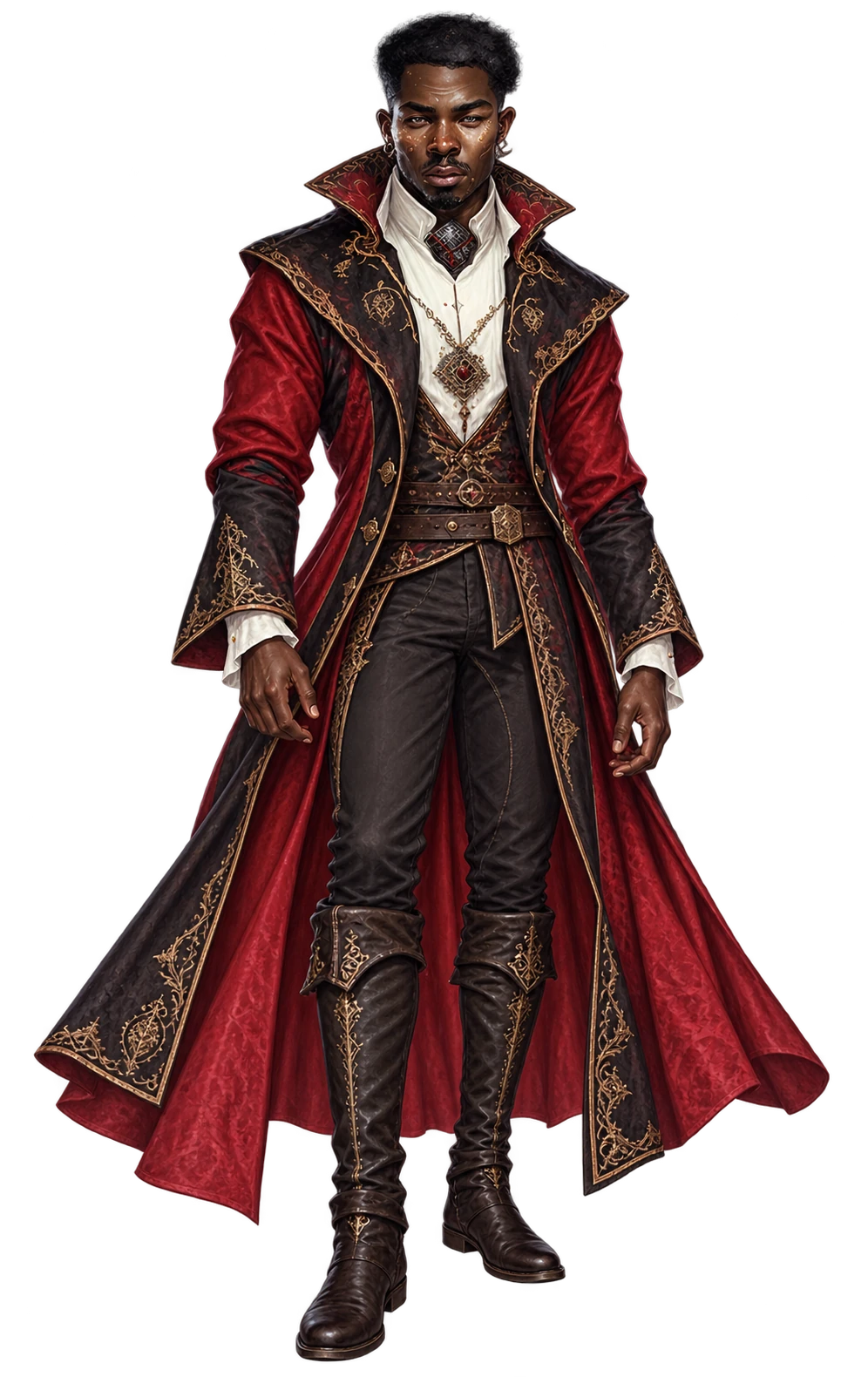
Ekrius Ashborne, full-body adventuring character model
Ekrius Ashborne

Tiefling

Ekrius Ashborne

Ranger · Gloom Stalker / Rogue · Scout

Watchful, dryly funny, and much better at offering protection than accepting it.

A crimson coat, gold stitching, and a watchful face make Ekrius easy to remember. His bow and knowledge of the back roads make him harder to corner. He can plan an escape for everyone in the room and still struggle to tell a friend he needs help. Rian is his chosen brother and the rival who can still bait him into a foolish contest.

Raised by: Ena, his human mother, and Dovan, his tiefling father.

Get to know Ekrius History, instincts, and connections

Family and heritage

Ekrius is a tiefling born to Ena, a human, and Dovan, a tiefling. His tiefling heritage comes through his father’s family; his deep brown coloring resembles his mother’s.

The road behind them

Ena and Dovan raised Ekrius together above a dyer’s shop. Ena washed and mended other people’s linen; Dovan carried surveying poles for officials who could dismiss an inconvenient measurement. When wages stopped, Ena counted food, fees, and favors before allowing herself an argument. Dovan taught his son to check a crossing even when the employer wanted haste. Their marriage gave Ekrius two models of courage: insisting on the truth and keeping a household fed while somebody made truth expensive.

Errands became his first education: which alley flooded, who needed coal carried upstairs, and when yesterday’s bread could still become somebody’s supper. As a temple acolyte, he discovered ward diagrams that made the city look different again. Long before he learned the bow, Ekrius was learning that knowing a route and understanding the people along it are different skills.

What they carry

His crimson-and-black coat, high collar, gold embroidery, and pendant give him an unexpectedly formal silhouette for a man who studies drainage. He takes pride in looking cared for, an instinct learned in a household where clean cuffs cost work. The bow is his practical reach; the leaf beneath glass is his private measure of value. Neither a fine coat nor an impressive weapon makes asking for help easier.

What they notice
Terrain, patterns, and the exit everyone else missed.

Under pressure: Turns being needed into a reason to avoid being known.

Can a protector learn to trust a map drawn by someone else?

Fun Facts Little gifts. Questionable uses.

Website worldbuilding extras, not scenes quoted from Book One. Learned abilities develop with training.

  • Inherited gift

    The door was already open

    Ekrius can use Thaumaturgy to make an unlocked door swing open and give his voice a threatening boom. He prefers to save that entrance for someone who deserves it. Jarik objects to a perfectly good theatrical talent being used so infrequently.

  • Equipment

    A fine coat still has to survive the road

    The crimson coat and gold stitching satisfy a pride Ekrius rarely admits to. Ena’s working hands taught him what clean clothing costs. He checks the hem for snags, the bowstring for wear, and everyone else’s footing before remembering he has been invited somewhere to enjoy himself.

  • Inherited gift

    Excellent lookout. Unreliable wardrobe consultant.

    His darkvision picks out nearby shapes in darkness, not colors. He can spot someone approaching camp and still hand Jarik the wrong scarf. Jarik considers this a serious failure of reconnaissance.

  • Personality

    He can find the exit from a compliment

    Praise his scouting and Ekrius will explain the terrain. Thank him for staying beside you and he will suddenly remember a perimeter that needs checking. Rian has learned to walk with him instead, usually while proposing a contest Ekrius insists he is too sensible to enter. Ekrius then asks about the rules.

  • Personality

    The leaf is not for sale

    The leaf beneath glass comes from the tree outside his childhood temple. In the prologue, a collector offers to buy it and Mera asks whether he also purchases other people’s teeth. It is a useful introduction to how this group expresses affection.
Compare ancestry traits →
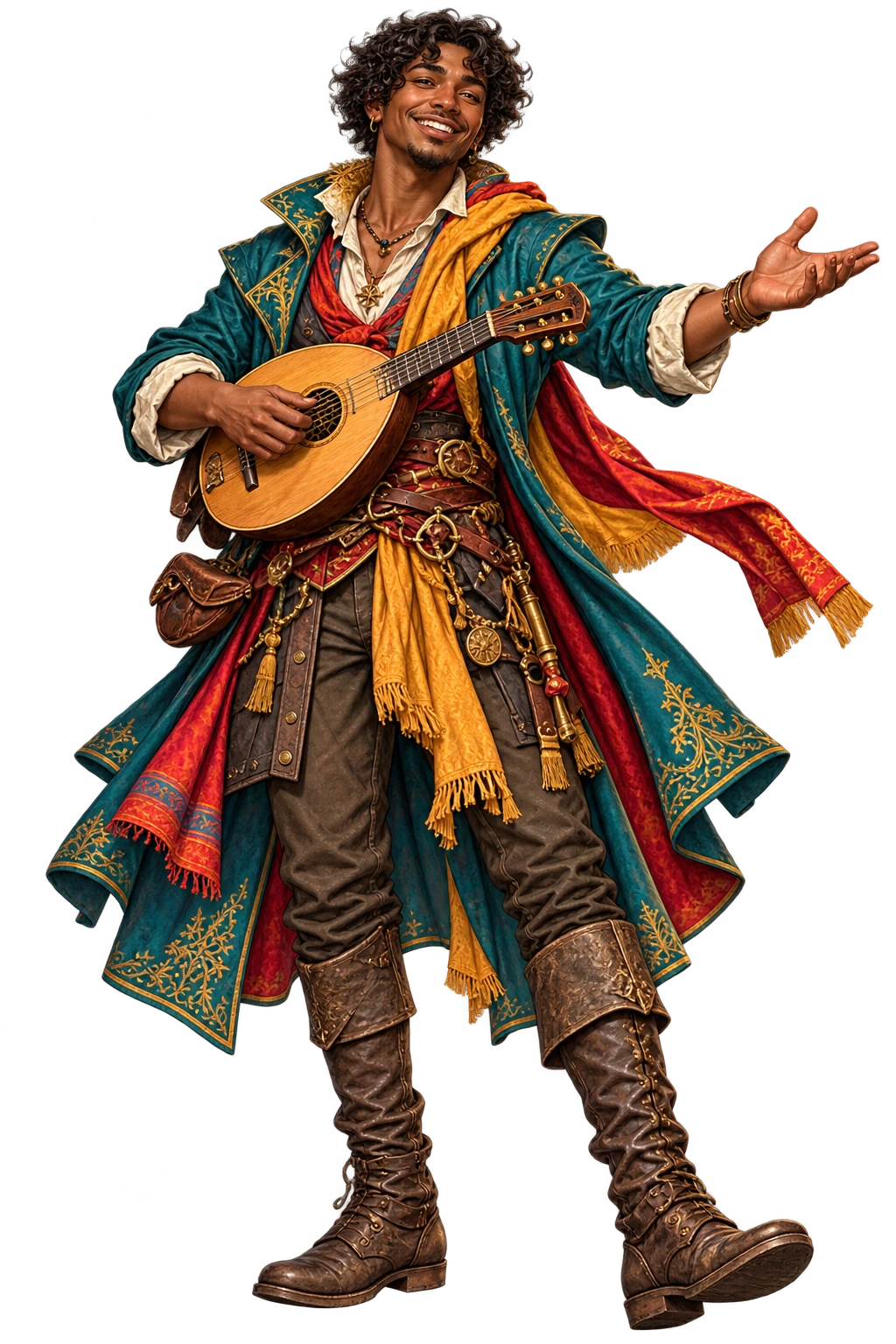
Jarik Fairwind, full-body adventuring character model
Jarik Fairwind

Human

Jarik Fairwind

Bard · College of Eloquence

Generous, theatrical, and occasionally his own escape route’s greatest obstacle.

Lute in hand and mustard scarf rarely where he left it, Jarik can make a cold room feel like an occasion. His teal-and-gold coat invites attention. Whether that attention will earn the company a meal or a hurried exit depends on how long he keeps talking.

Raised by: The Hearth community after his mother died and his father disappeared on road labor. Father Daren offered shelter; Mistress Vale became his musical mentor.

Get to know Jarik History, instincts, and connections

Family and heritage

Jarik and both his parents are human. The company he found at the Hearth became part of his chosen family.

The road behind them

Jarik’s mother died, and his father failed to return from road labor. A missing father left questions that an empty stomach could not wait to settle. The Hearth became his safety net: meals, familiar adults, somewhere to be expected. Father Daren helped keep that door open. Mistress Vale later gave his musical talent discipline and a relationship he did not have to earn with a performance. Jarik learned to make himself welcome quickly, and to notice anyone still standing outside the circle.

Performance gave him a way into a room. Paying attention helped him understand what to do once he was there. Among his friends, he supplies charm, distraction, and names for their exploits that Sera would prefer he never repeat near a guard. His generosity is rooted in experience, and his confidence has a habit of arriving a little ahead of his plan.

What they carry

The lute carries his music and bardic craft. Spare strings matter more to him than another polished buckle, although he would prefer both. The teal coat, red lining, mustard scarf, and small ornaments make a performance out of arriving. He fusses over their condition because being visibly worth someone’s attention once felt dangerously close to being worth feeding.

What they notice
The rhythm of a room and the person who needs a reason to speak.

Under pressure: A convincing performance can get ahead of an honest answer.

Who is Jarik when the room does not need a performance?

Fun Facts Little gifts. Questionable uses.

Website worldbuilding extras, not scenes quoted from Book One. Learned abilities develop with training.

  • Personality

    He rehearses the introduction, not the escape

    Jarik can spend a walk inventing an impressive name for the company’s next exploit. Sera wants to know why they need an exploit at all. Ekrius wants to know whether Jarik has noticed the locked gate ahead.

  • Personality

    The scarf keeps finding another owner

    His mustard scarf has a suspicious habit of getting lost near someone who needs an extra layer. He makes its disappearance sound like an artistic inconvenience. Asking directly whether he gave it away tends to produce a much longer story.

  • Learned craft

    A song can leave a door open

    Jarik likes a tune with a line other people can join. As his bardic training develops, that instinct becomes Bardic Inspiration: a word or melody that genuinely helps a companion. Sometimes the important performance is letting somebody else be heard.

  • Personality

    Absolutely devastating when nobody is watching

    Give him an empty room and he will still try the entrance twice. Give him one exhausted friend and the grand delivery can vanish. He knows how to be quiet company, although he would hate for that to damage his reputation.

  • Equipment

    The coat gets applause. The lute gets inspected.

    Jarik can discuss his teal coat and mustard scarf at exhausting length, but reach for his lute with greasy fingers and his attention becomes impressively brief. He checks its strings before a performance. Vale taught him that warmth wins a room more reliably when the instrument is actually in tune.

Compare ancestry traits →
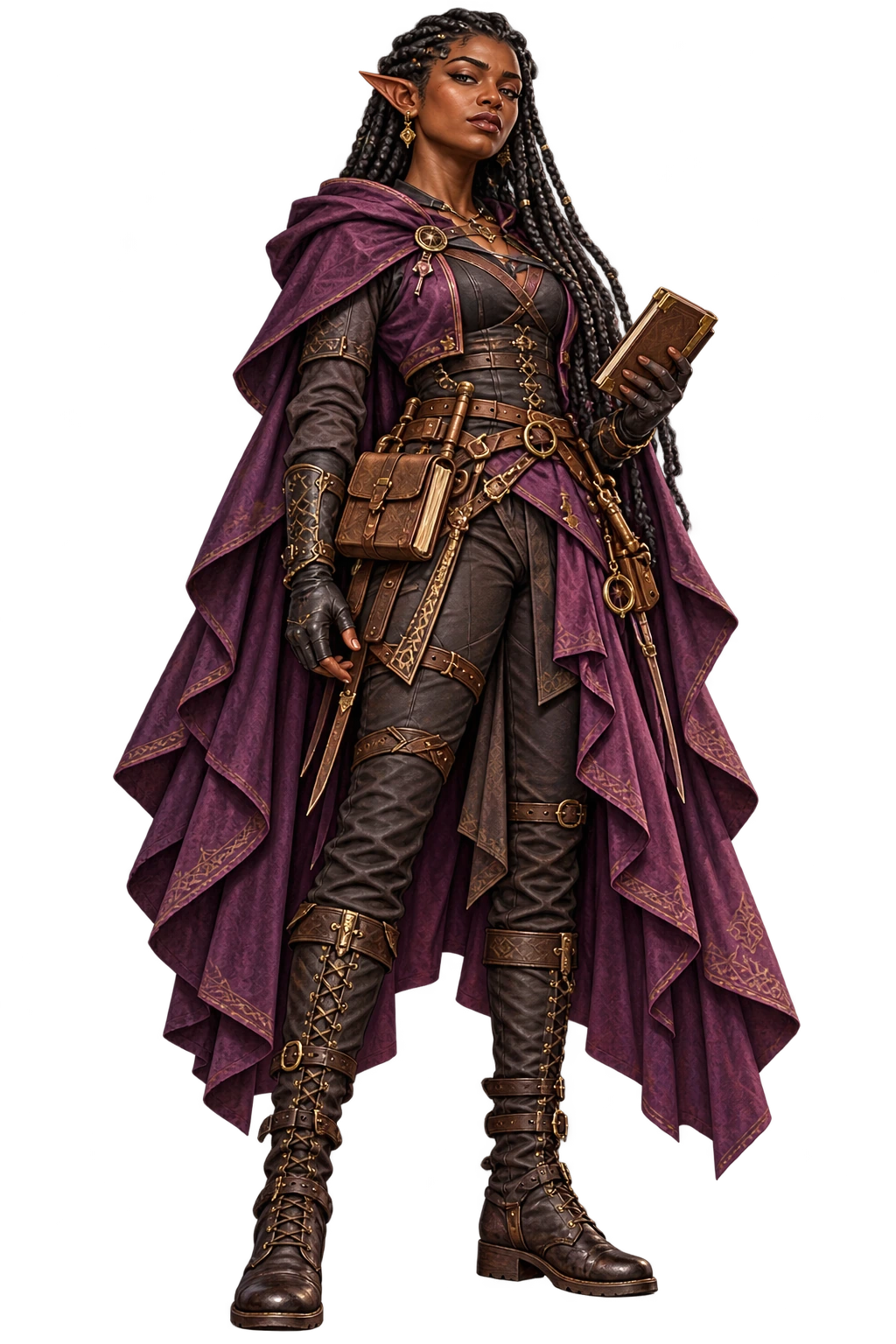
Sera Veythorn, full-body adventuring character model
Sera Veythorn

Half-elf

Sera Veythorn

Rogue · Inquisitive

Sharp, guarded, and quietly protective of the people she lets close.

Sera wears plum cloth over fitted leather, carries a notebook within easy reach, and keeps her blades closer. She would rather catch a lie before anyone draws steel. Her sharpest questions often arrive just after someone assumes the conversation is over.

Raised by: Her human mother, a working copyist. Her elven father is absent, and the reason remains a closely guarded family question.

Get to know Sera History, instincts, and connections

Family and heritage

Sera’s mother is human and her father is an elf. Why he is absent remains an unanswered family question.

The road behind them

Sera’s human mother raised her while earning wages as a copyist. Her elven father’s absence became a subject the household closed around. Copying agents could withhold pay, blame a worker for somebody else’s spoiled parchment, and punish a protest by removing more than one woman from a work list. Her mother learned to keep anger controlled until it could be used safely. Sera inherited the habit of preserving exact words, along with a much shorter tolerance for people who call exploitation a misunderstanding.

Her mother’s copying work took the family close to the city’s written promises and the people who controlled them. Sera developed a preference for notebooks, precise questions, and conclusions that could survive another look. She wrote the friends’ house rules on a broken sign. Beneath the guarded manner is someone who takes belonging seriously enough to give it terms.

What they carry

Her notebook grows out of her mother’s trade: a copied line can survive a confident liar. Belt pouches keep writing supplies and small tools accessible, while narrow blades offer an answer when distance closes. The plum color echoes the hand-me-down jacket her mother altered for her. Fine clothing and careful mending sit together in her sense of dignity; she notices anyone who mistakes either for softness.

What they notice
What was omitted, who supplied the answer, and why the details disagree.

Under pressure: Keeping control can feel safer than letting a friend close.

What would convince someone who checks every promise?

Fun Facts Little gifts. Questionable uses.

Website worldbuilding extras, not scenes quoted from Book One. Learned abilities develop with training.

  • Personality

    Her notebook has a very polite voice

    Sera may write “account requires clarification” while wearing an expression that says something considerably less charitable. She records what someone actually said before adding what she thinks they meant. The distinction matters most when she likes the person.

  • Equipment

    Two ways to finish an argument

    Sera keeps the notebook where she can reach it before her blades. Her mother’s copying work taught her that a precise record can outlast a loud denial. The narrow weapons are there for a closer danger. She checks her belt before entering a crowd and checks her notes after leaving one.

  • Inherited gift

    She heard the invitation. She is checking it.

    Her fey ancestry helps her resist magical charm, and magic cannot put her to sleep. Flattery can still work without a spell. Sera’s preferred defense is asking exactly what the flattering person wants before accepting their very reasonable explanation.

  • Ancestry

    The night watch does not replace bedtime

    Sera can pick out nearby shapes in darkness with half-elven darkvision, but she does not inherit the full elf’s trance under the book’s rules framework. She needs ordinary sleep. Keeping a notebook beside the bed does not make an interrogation a restful activity.

  • Personality

    Affection, filed under “practical arrangements”

    She remembers who hates a crowded doorway and who needs a moment before answering. She will arrange a quieter seat and deny that she has done anything sentimental. Jarik has learned not to announce these kindnesses to the whole table.

Compare ancestry traits →
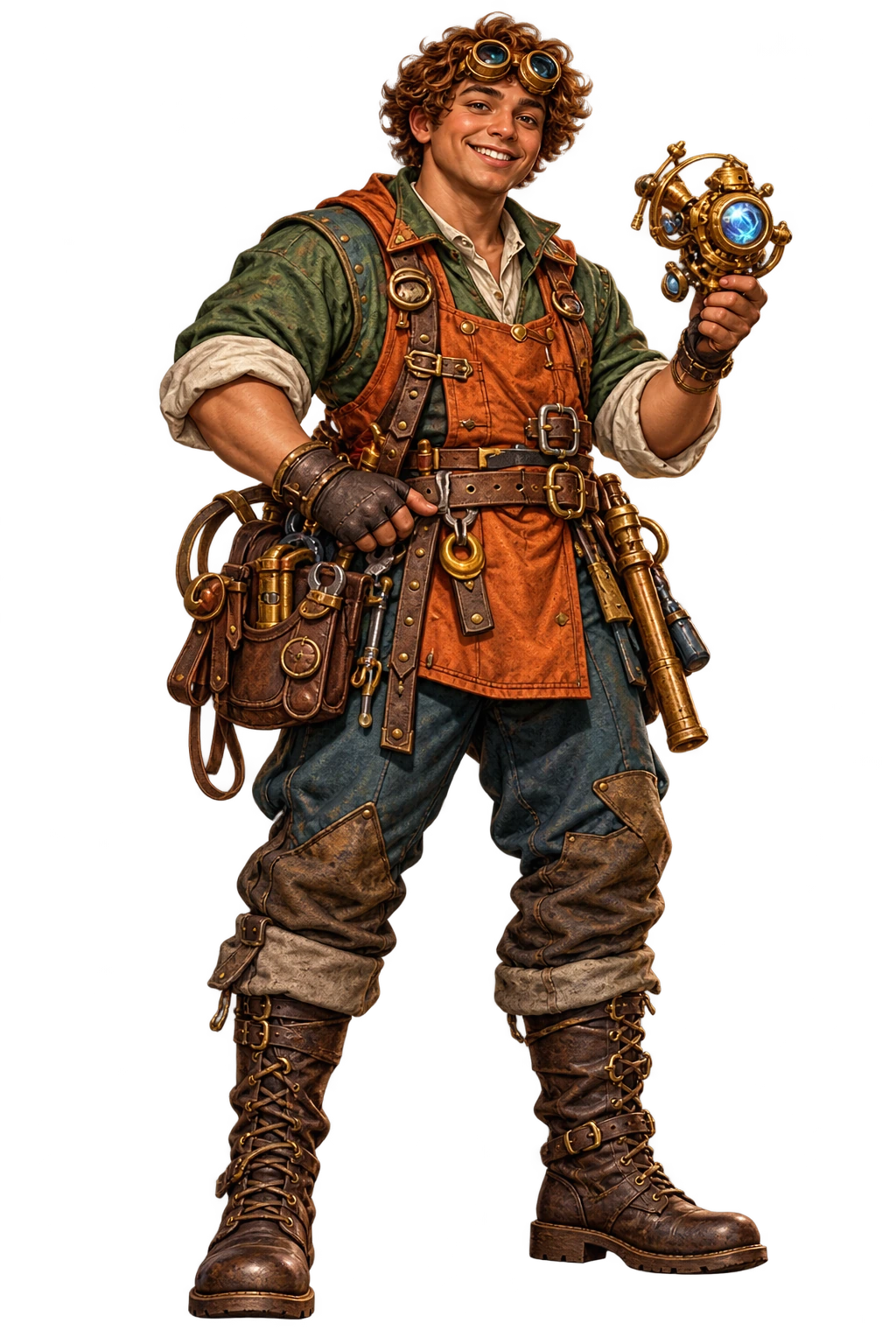
Kel Brasswick, full-body adventuring character model
Kel Brasswick

Human

Kel Brasswick

Artificer · Artillerist

Affectionate, inventive, and willing to argue with an object until it cooperates.

Goggles above his curls, tools at his waist, and a blue-lit device in hand, Kel looks ready to solve the problem that brought you here. He also looks capable of inventing a second problem while demonstrating the solution. Ask before touching the brass fittings.

Raised by: His aunt Omi, who became his guardian after both his parents died in a kiln accident. Master Oren is his craft mentor.

Get to know Kel History, instincts, and connections

Family and heritage

Kel, his late parents, and his aunt Omi are human.

The road behind them

Both of Kel’s parents died in a kiln accident. His aunt Omi became responsible for the meals, the rent, and a boy who could turn household objects into an experiment. Her pickle cart depended on bargaining, repeat customers, and knowing how much stock a bad week could spoil. She protected his curiosity while demanding that useful work eventually pay for something. Master Oren became a craft mentor, building discipline on the foundation Omi had already supplied: someone expected Kel to come home.

He arrived at gatherings carrying screws, wire, and the conviction that enough parts could solve a problem. Evening work with a lamp repairer gradually gave that optimism practical skill: a clean soldered joint, a repaired light, a useful thing assembled from what others discarded. For Kel, craftsmanship is tied to earning his way and caring for the person who raised him.

What they carry

The brass-rimmed goggles, leather apron, tool belt, and crowded satchel belong to a hands-on artificer. The blue-lit device in his portrait gives his spellcraft a visible housing: lenses, fittings, and something he can inspect when it misbehaves. As his Artillerist training grows, that craft can become protective or destructive machinery. A glowing lens still has to earn his trust through testing.

What they notice
The joint, mechanism, or small failure hidden beneath a confident promise.

Under pressure: A repair can command his attention more easily than a person.

What happens when the thing that needs fixing cannot be taken apart?

Fun Facts Little gifts. Questionable uses.

Website worldbuilding extras, not scenes quoted from Book One. Learned abilities develop with training.

  • Equipment

    The blue light has a housing for a reason

    The brass device in Kel’s hand gives his artificer spellwork lenses, fittings, and a casing he can open. He is proud of making magic tangible. Asking him what happens if the blue light changes color earns a detailed explanation, followed by a request to stand slightly farther away.

  • Equipment

    Goggles first. Explanations second.

    Kel’s goggles protect the eyes that spot a hairline fault. His apron and tool belt keep useful things close, although the tool he needs may still be in the satchel. Omi’s market rule follows him into the workshop: stock you cannot find might as well belong to somebody else.

  • Personality

    He apologizes to stubborn machinery

    People hear him arguing with a fitting and assume he is angry. Listen longer and he may be promising it a better hinge. He knows the object cannot forgive him. Talking through the problem is useful, and the object interrupts less than Mera.

  • Personality

    Omi is difficult to impress twice

    His aunt’s faith in him is enormous. Her interest in another invention that might damage the curtains is much smaller. Kel has developed a detailed distinction between “working,” “ready to demonstrate,” and “ready to demonstrate indoors.” Omi recognizes only the last one.

  • Personality

    He repairs the favor into the object

    If a friend lends him a lamp, Kel finds it difficult to return it with a loose catch. Unfortunately, improving the catch can become improving the handle. The friend may have to remind him that they wanted light tonight, not a remarkable lamp next week.

Compare ancestry traits →
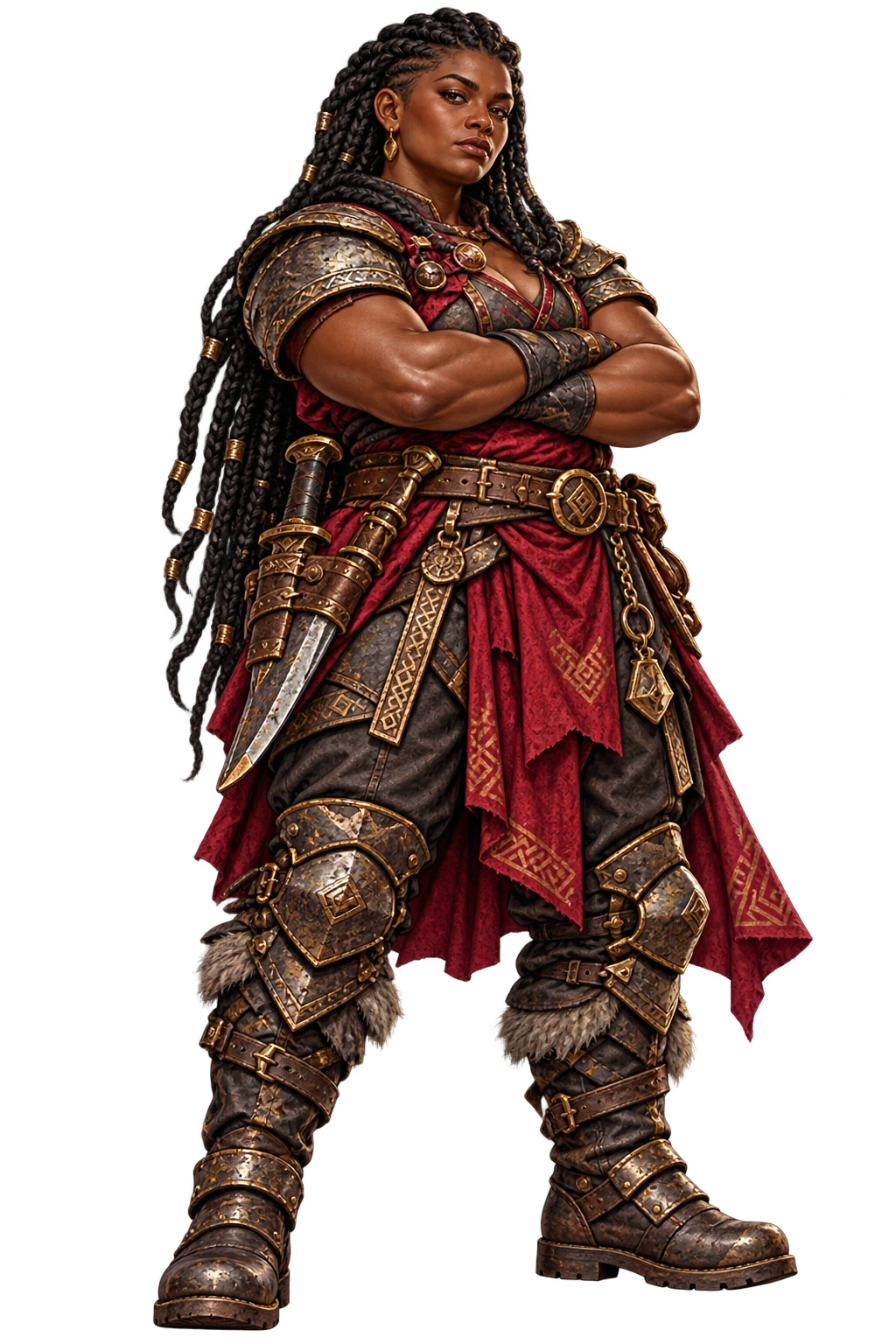
Mera Flint, full-body adventuring character model
Mera Flint

Mountain dwarf

Mera Flint

Fighter · Battle Master

Blunt, fiercely loyal, and rarely impressed by a beautifully worded bad idea.

Mera wears layered armor, crimson cloth, and a pair of broad blades with the confidence of someone who has already checked the footing. She can be the safest person to stand beside and the most aggravating person to ask for permission. Bren gets away with more than the others.

Raised by: Her mountain-dwarf parents. Her mother anchors the household; her father’s absence leaves questions Mera fiercely protects.

Get to know Mera History, instincts, and connections

Family and heritage

Mera, her parents, and her younger brother Bren are mountain dwarves.

The road behind them

Mera’s mountain-dwarf parents brought the family down from the workshops after a mine closed. Debt traveled with them. Her mother learned to stretch supplies, guard the cooking pot, and keep a household functioning when her husband was absent. Her father remains a painful family subject; Mera lets a question about work pass more easily than a question about him. She took on freight-yard wages and much of Bren’s daily care. Strength became something the household relied on, making it difficult for her to admit when she needed another pair of hands.

The freight yards gave her work and a practical education in weight. Training with the yard guards added discipline, especially when Tessa taught her to trust the position of her feet before the strength of her arms. Mera brought the lessons home and insisted the others learn how to fall. Protecting people comes naturally to her; waiting for their agreement can take more effort.

What they carry

The overlapping armor, heavy boots, and broad belt suit a fighter who expects to hold ground. The paired blades in her portrait sit within easy reach, while crimson cloth and gold details give her room for pride as well as practicality. She checks fastenings as carefully as edges. She knows how quickly a loose strap, an awkward load, or one person trying to carry everything can become somebody else’s emergency.

What they notice
Weight, balance, and who will actually carry the load.

Under pressure: Protection can become a decision made on someone else’s behalf.

When does holding the line become refusing to move?

Fun Facts Little gifts. Questionable uses.

Website worldbuilding extras, not scenes quoted from Book One. Learned abilities develop with training.

  • Inherited gift

    The drinking contest has terms

    Dwarven resilience gives Mera an edge against poison, not a guaranteed victory or immunity to getting drunk. She is happy to advertise the first half. Sera insists the second half belongs in any wager, and absolutely nothing Kel has brewed counts as ale.

  • Equipment

    Two blades, one very practical question

    The broad blades at Mera’s hip invite speculation about her fighting style. She wants to know whether the person admiring them has checked the exit. Tessa’s training made footwork part of her craft; Mera also insists on sound grips and room to move without cutting a friend’s sleeve.

  • Personality

    Bren has excellent negotiating materials

    Mera can refuse a polished merchant without blinking. Her little brother arriving with another pocketful of stones and a masonry question is a more difficult opponent. She will complain about the extra weight while finding somewhere safer to carry his best specimen.

  • Equipment

    Armor has an embarrassing weakness

    Mera trusts a checked fastening more than a boast about fine metal. Her layered armor and heavy boots need maintenance, and she will stop to fix a slipping strap while everyone complains about the delay. Her mother’s response to an expensive buckle is usually asking whether the old one can be repaired.

  • Personality

    An insult with excellent follow-through

    Mera may call a friend an idiot while adjusting the load that is cutting into their shoulder. She expects the argument to continue after everyone reaches shelter. Anyone who mistakes the insult for permission to hurt that friend has misunderstood the arrangement.

Compare ancestry traits →
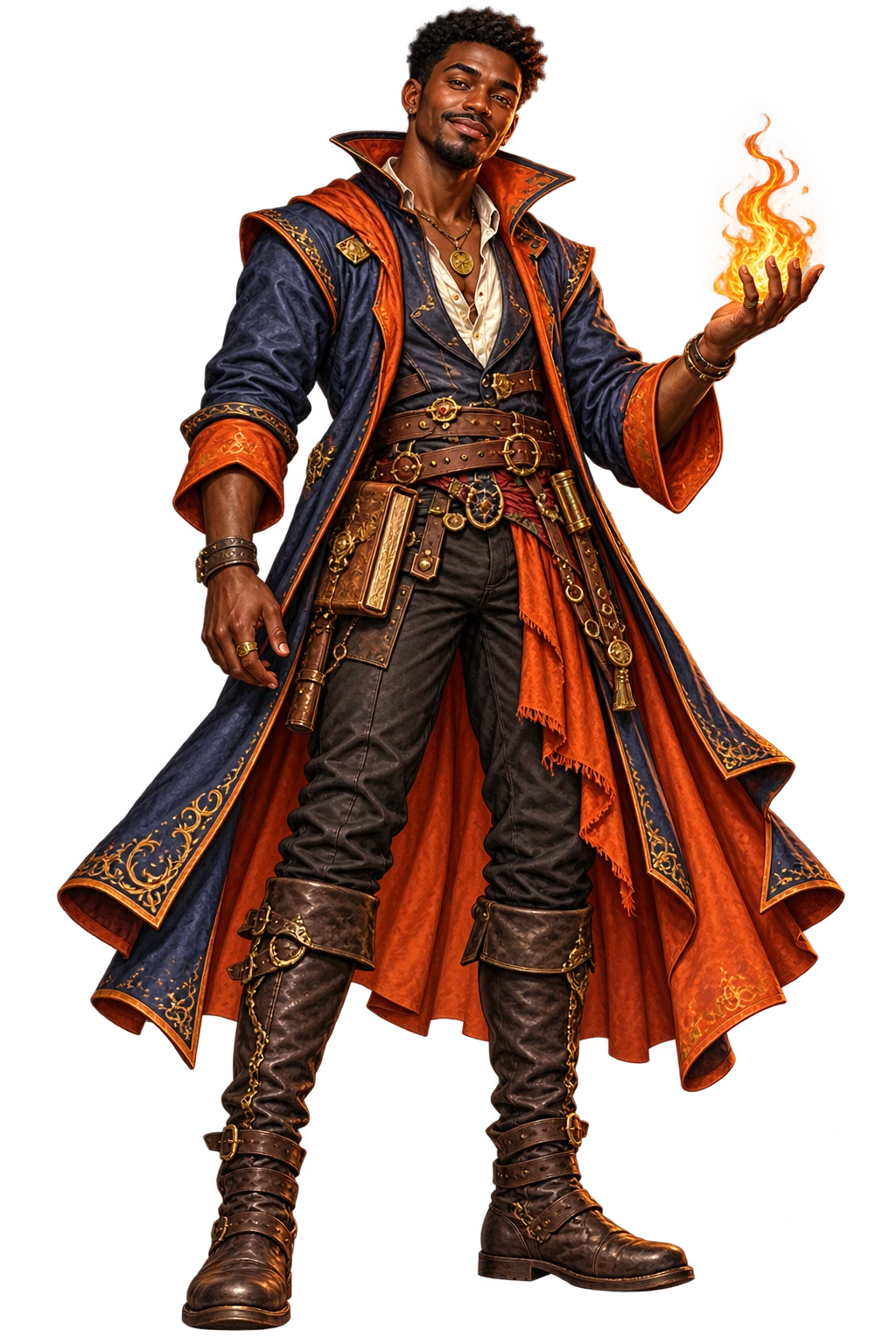
Rian Emberfell, full-body adventuring character model
Rian Emberfell

Human

Rian Emberfell

Warlock · The Fiend

Warm, quietly competitive, and considerably more capable than he lets on.

An easy smile, an indigo coat, and a flame over his palm make Rian hard to overlook. His wider talents are easier to miss, partly because he helps keep them that way. Strangers often take him and Ekrius for brothers. Their affection is real, and so is their determination to beat each other to the next gate.

Raised by: His human mother, a finishing-mill worker. His father was absent from their household; his father’s identity and whereabouts remain unresolved.

Get to know Rian History, instincts, and connections

Family and heritage

Rian and his mother are human. His pact gives him magic and obligations, not a different ancestry.

The road behind them

Rian was raised by his human mother, who worked nights in a finishing mill and sometimes slept sitting up at the Hearth. His father was absent from that household; Rian offers little about his father’s identity or whereabouts. His mother survived through shifts, carefully chosen work, and the people she could ask for help without surrendering every choice in return. Rian learned to watch exhaustion as closely as hunger. Father Daren and the Hearth offered support, while the responsibility Rian felt for his mother made any promise of relief difficult to ignore.

As he grew older, he chose work that left him time to care for his mother. Among the friends he was the person who divided bread with room for another arrival, even when nobody else was expected. His attention makes him indispensable, but it also leaves him vulnerable to promises that ask him to keep giving. He also makes room for Ekrius, his chosen brother and favorite competitor. Their resemblance earns questions about kinship, but they are not blood relatives. Rian is human and Ekrius a tiefling. One reads the route; the other finds an unexpected approach. Each can goad the other into proving a point that did not need proving. Beneath Rian’s generosity lies another uncertainty: why does someone with so many gifts reveal so little of himself?

What they carry

The flame above his palm is pact magic, shaped through practice and tied to obligations. Fire is the element he favors and allows others to associate with him. His concealed reach across other elements has uneven limits; its full history remains a question. His indigo-and-orange coat, open collar, pendant, and belt pouches give him warmth and confidence before anyone sees the fire. He is human, without inherited fire resistance, and learning to control dangerous power asks more of him than looking comfortable beside it.

What they notice
The empty bowl, the exhausted parent, and the person nobody asked about.

Under pressure: Offers help readily, then withholds the truth about what it costs him or what he can really do.

What is Rian protecting by letting everyone see only part of him?

Fun Facts Little gifts. Questionable uses.

Website worldbuilding extras, not scenes quoted from Book One. Learned abilities develop with training.

  • Learned craft

    Fire is the part he lets you see

    Rian knows how to conjure and shape almost every natural element, including fire, water, wind, earth, ice, and lightning, with wildly uneven results. Fire is his favorite and most practiced public display. He keeps the rest quiet. With one element he can be precise; with another, a small effect takes stubborn concentration and leaves him spent. Breadth gives him possibilities, not mastery of every situation.

  • Personality

    He makes being useful look suspiciously easy

    A deft repair, an unexpectedly good melody, a skill he claims to have picked up somewhere: Rian is good at far more than he advertises. He will help someone finish a task and let them take the credit. Ask how much he actually knows and the conversation often becomes about your day. What does he think would happen if everyone saw the full extent of him?

  • Personality

    Brothers, according to everyone who has met them

    People often mistake Rian and Ekrius for blood relatives. They are brothers by choice: Rian is human, Ekrius a tiefling. Each trusts the other to stand beside him, then argues about who reached the gate first. Ekrius brings patient precision; Rian answers with instinct and surprising versatility. Friendly competition can become a foolish wager remarkably quickly. Neither enjoys losing as gracefully as he claims.

  • Learned craft

    Taking a break requires witnesses

    As his Pact Magic develops, a short rest can restore his spell slots. Getting Rian to take that rest is another matter. Give him a chair near someone who needs help and he will try to turn sitting down into a useful assignment.

  • Equipment

    Ember-orange is allowed to be vanity

    Rian likes the orange lining against his indigo coat. It makes him feel handsome, which he finds much easier to admit as a joke. The pendant and bright fittings complete the look. His human skin still needs protection from heat; dressing like a flame does not make him fireproof.

Compare ancestry traits →
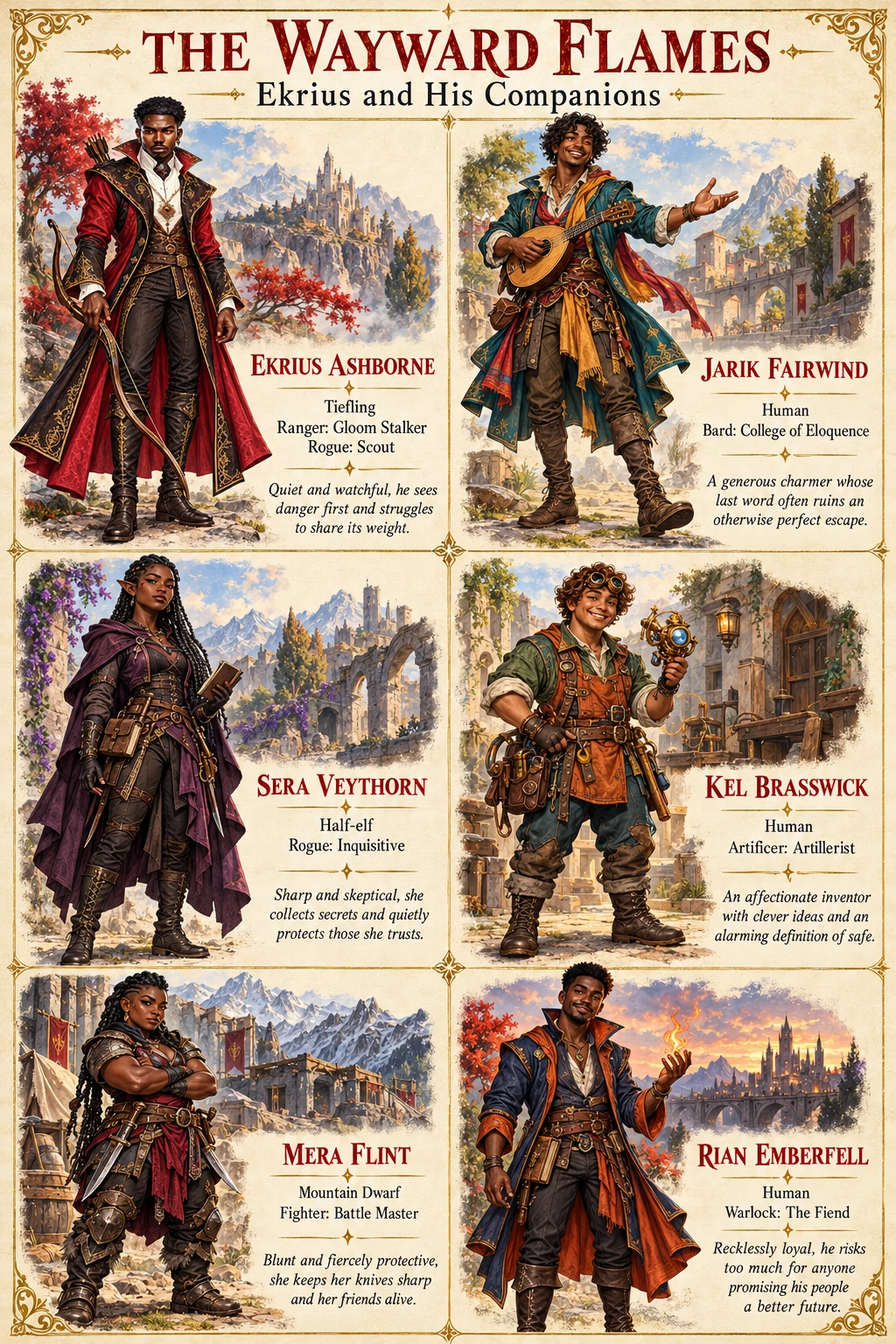
See the illustrated cast and their adventuring identities

A visual reference to the six companions, their ancestry, specialties, and equipment.

The Wayward Flames illustrated reference sheet showing the six companions, their ancestry and classes

A world by Joel Lomnick. Book One begins the planned six-book journey.

An independent fantasy passion project inspired by tabletop roleplaying. Character and cover artwork created with AI assistance under the author’s direction.