Electrical engineering · EIT

Clear decisions. Buildable systems.

At Stratus, formerly Ascent Engineering Group, I work on educational and public-sector building systems. Power, lighting, controls, fire alarm, communications, and field conditions have to fit the same building. My work is to coordinate those needs and make the decisions understandable to the team.

My foundation combines a B.S. in Electrical Engineering from RIT, an A.S. in Business Administration from Hudson Valley Community College, and an A.S. in Construction Management from San Joaquin Valley College. I hold EIT status and am pursuing PE licensure in Electrical Power.

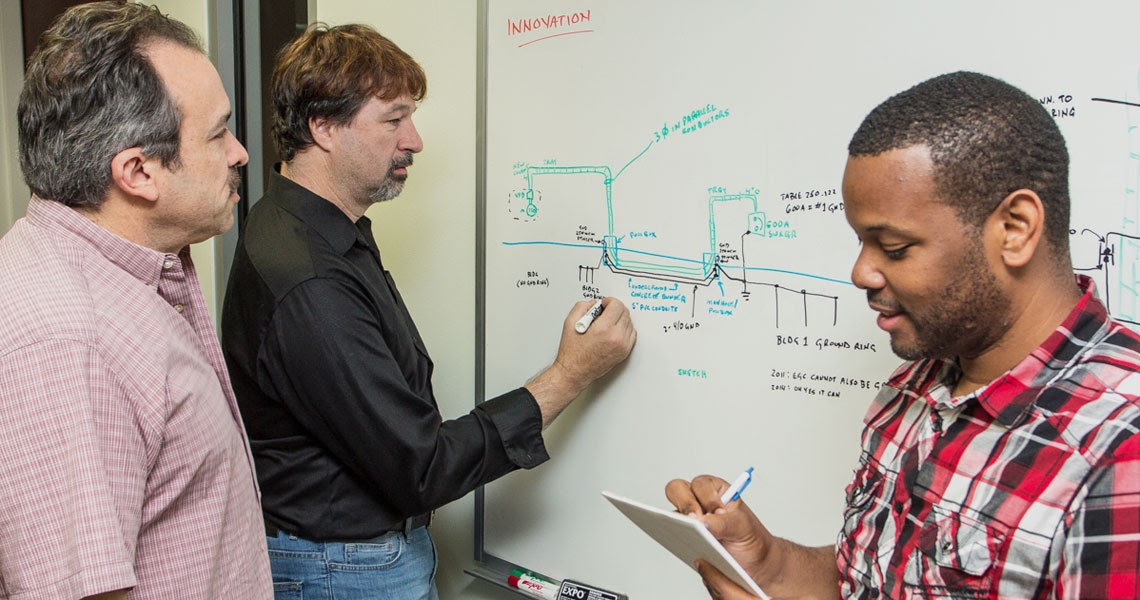
Joel Lomnick taking notes during an engineering coordination discussion at a whiteboard.
Clarity often starts with three people comparing what they see.

Design & coordination

Many systems, one usable building.

I coordinate electrical scope with architecture, mechanical systems, technology, life safety, construction sequence, and the people who will operate the building. Schools and public buildings make that responsibility especially tangible.

I ask where energy enters and branches, which decisions affect other disciplines, and how someone else can verify the result. A clear drawing should help the team understand both the decision and its consequences.
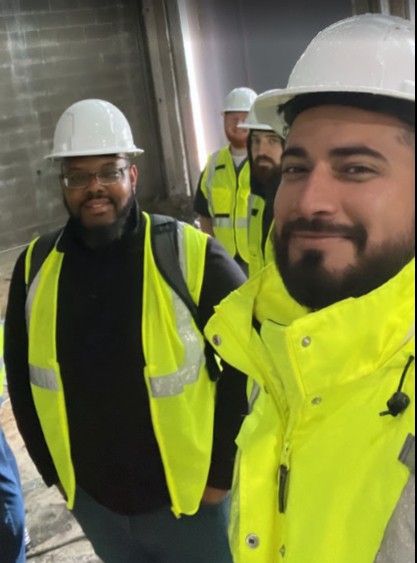
Joel Lomnick and engineering teammates wearing hard hats and high-visibility vests during a field visit
Field investigation with the engineering team: comparing the drawings with the building.

Field investigation

The building gets the final word.

Existing conditions rarely match the neat version in an old file. I document what is actually there, compare it with the record, and bring the mismatch back to the team before it becomes a change in construction.

A site walk can settle a question that hours at a desk cannot. Careful observation, useful photographs, and clear notes are part of the engineering.

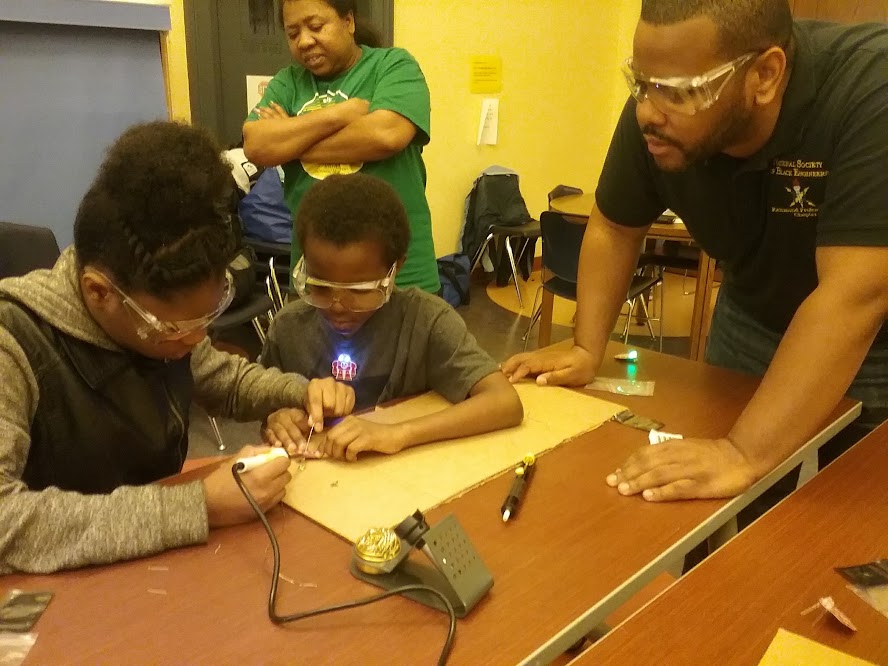
Joel Lomnick helping students solder an electronics project during a STEM outreach activity
Hands-on STEM outreach: helping students connect an electrical idea to a working project.

Engineering education

Let someone test the idea.

Through NSBE outreach, mentoring, and Engineering 101, I break technical work into steps a beginner can question, practice, and explain in their own words. My own path through RIT taught me the value of a clear method, useful questions, and hands-on learning.

The 12-page Engineering 101 student guide turns a familiar classroom into a design challenge. It includes diagrams, activities, and prompts for students to explain their choices.

Examples from my practice

What the work looks like.

School energy monitoring

A solar installation raises questions beyond the panels. I help distinguish production data from building consumption, identify the information an owner needs, and coordinate metering and communication requirements with the wider team.

My contribution: electrical coordination, assumption checks, and explanations that help the team decide what to verify next.

Existing-building renovations

A new program may inherit equipment, drawings, and infrastructure from another use. I compare the record with field conditions, review equipment requirements, and identify what must be confirmed before electrical scope is finalized.

My contribution: field notes, design documentation, interdisciplinary coordination, and construction-phase responses.

Making analysis usable

A detailed answer is not always the most useful first answer. I lead with the decision, explain its effect on the project, and keep the supporting calculation or record available for the people who need to check it.

That is a communication skill I keep practicing, not something a degree finished teaching me.